Supporting Research
Orca Conservancy is committed to supporting the science that shapes management, marine policy, and conservation action. These projects, led by research associate Chloe Kotik, target important gaps in our understanding of killer whale ecology, health, and population dynamics to try to answer critical questions about whale welfare. Thanks to our international partners, our support extends through and beyond the Salish Sea, maximizing our positive impact on wildlife.
Current Projects:
Link coming soon!
Help Make Our Work Possible
In order to process samples and publish open-access papers, we need your support to make this possible. We are looking to raise a total of $50,000 to cover lab fees, sample processing, equipment, publishing fees, and more. Donate today!
Meet the Researcher
Chloe Kotik
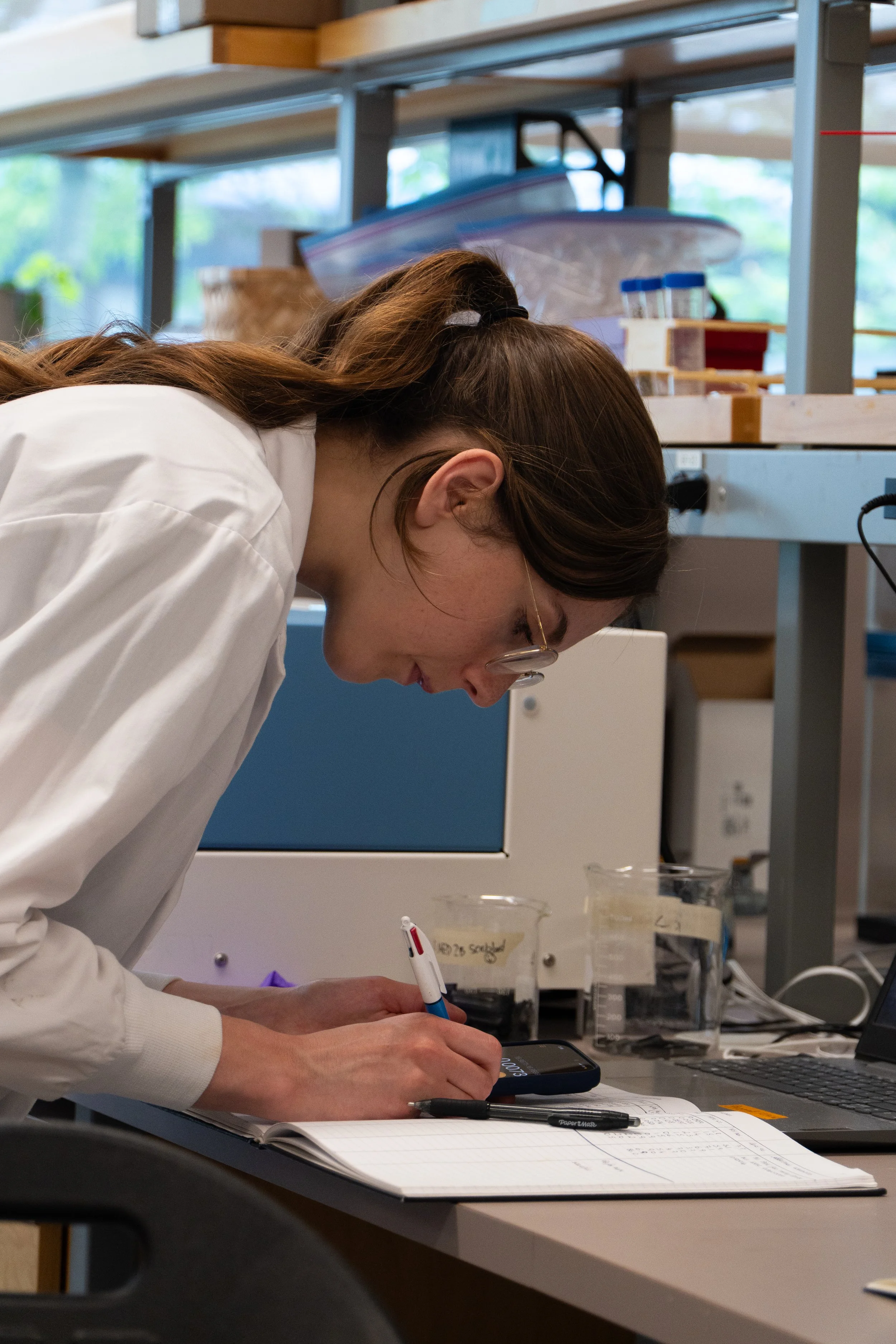
Associate ResearcherChloe Kotik in the lab, photo taken by Fred DeNisco
Chloe Kotik is a killer whale ecologist and doctoral candidate in the Horstmann Marine Mammal Lab at the University of Alaska Fairbanks (UAF). Born and raised in Boston, MA, she moved to the West Coast in 2016 and earned her B.Sc. and M.Sc. degrees in Marine Biology at the Scripps Institution of Oceanography, where she embarked on what would become a career specialization in the ecology of our oceans’ top predators. Having worked on a variety of projects investigating the health, growth, and behavior of killer whales, her current research at UAF aims to unravel fundamental aspects of life history, as well as the effects of toxic pollutants, in mammal-eating killer whales.
Chloe’s early research using drone photogrammetry to study growth and body condition in West Coast Transient and Southern Resident killer whales instilled a strong passion for minimally-invasive monitoring platforms. She is a firm believer in the importance of long-term, low-impact studies that address important conservation questions using existing data. This perspective informed her current work, which uses archived leftovers from previously-collected blubber biopsies to examine how killer whales respond to contamination.
In her current role, Chloe works closely with Fisheries and Oceans Canada and Bay Cetology, as well as partners at Simon Fraser University, Raincoast Conservation Foundation, the University of Oslo, and the Norwegian University of Life Sciences on multiple projects investigating killer whale behavior, ecology, and ecotoxicology.
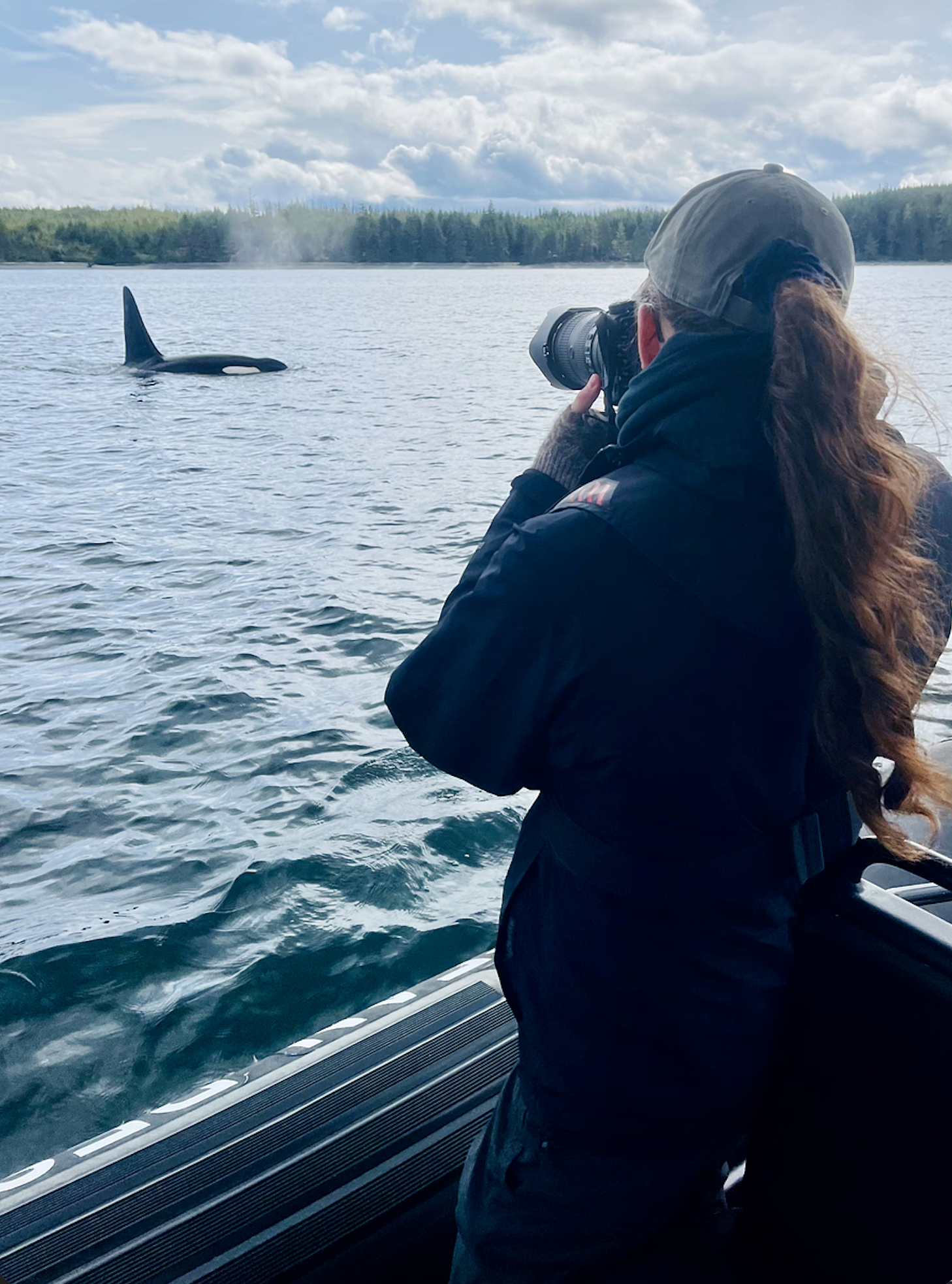
Chloe Kotik in the field, taken by Jared Towers, approach distance permitted under DFO MML-01
Publications
Life history and reproductive parameters in an increasingly abundant killer whale population.
Kotik, C., Doniol-Valcroze, T., Towers, J. R., and Horstmann, L. Ecology and Evolution (2026)
Observations on the Death of a Northern Resident Killer Whale
Kotik, C. & Towers, J. R. (2025).
Marine Mammal Science. 42. 10.1111/mms.70095.
Morphometrics of mammal‐eating killer whales from drone photogrammetry, with comparison to sympatric fish‐eating killer whales in the eastern North Pacific.
Kotik, C., Durban, J. W., Fearnbach, H., & Barrett‐Lennard, L. (2022). Marine Mammal Science. 39. 42-58. 10.1111/mms.12965.