ACTION ALERT: Submit a Public Comment on Lower Snake River Dams & Salmon Recovery
Submit a public comment on the Draft 2026 Columbia River Basin Fish and Wildlife Program (CRBFW) and urge the Northwest Power and Conservation Council to take science-based action to restore Chinook salmon and protect endangered Southern Resident killer whales.
Public comments are due by March 2, 2026
What is happening and why it matters?
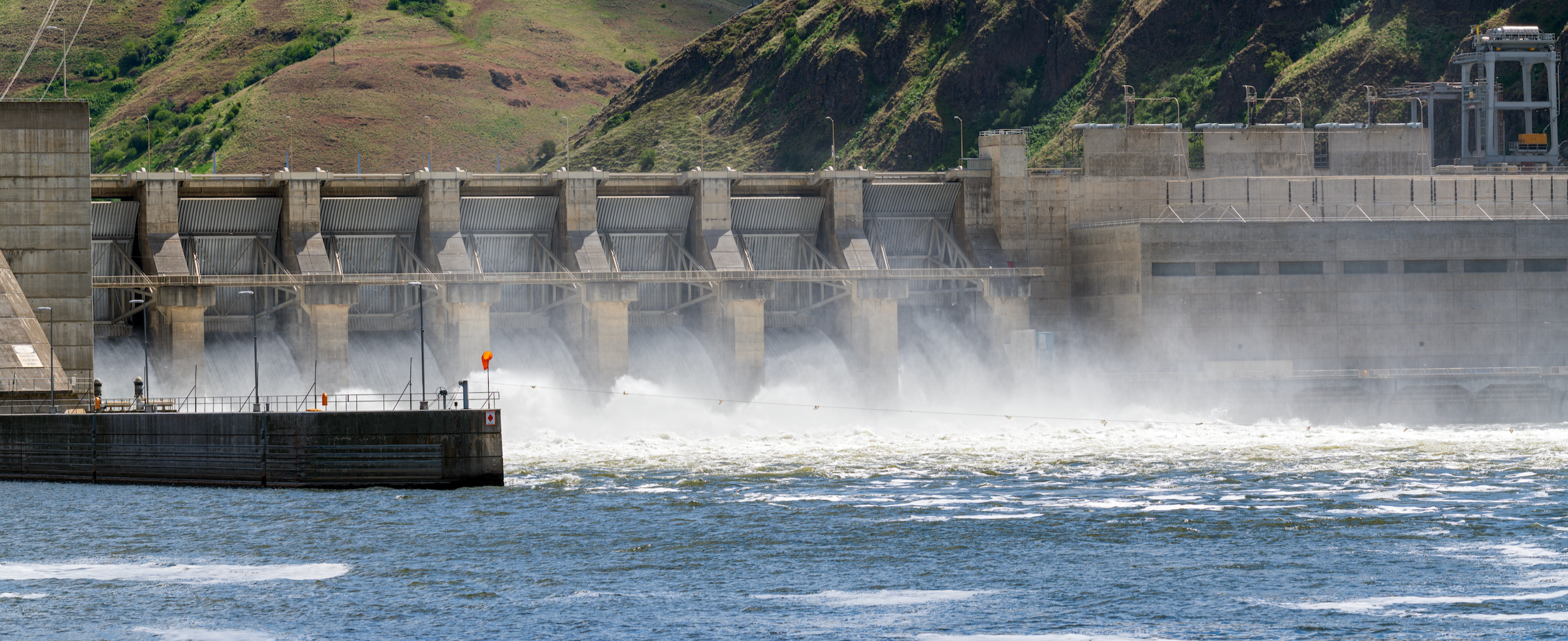
The Northwest Power and Conservation Council is currently updating the Draft 2026 Columbia River Basin Fish and Wildlife Program (CRBFW Program). This Program serves as the region’s framework for mitigating the impacts of the federal hydropower system on fish and wildlife throughout the Columbia and Snake River basins.
Under the Pacific Northwest Electric Power Planning and Conservation Act, the Council develops this Program to guide how the Bonneville Power Administration (BPA) funds and implements measures to “protect, mitigate, and enhance” fish and wildlife affected by hydropower dams.
How will this impact orcas and salmon?
Southern Resident killer whales (SRKWs) are listed as endangered under the Endangered Species Act, and federal recovery planning has consistently identified one primary Southern Resident killer whales are listed as endangered under the Endangered Species Act, with diminiminishing food sources (Chinook salmon) being one of the identified threats under Federal recovert planning. Columbia Basin Chinook salmon are a primary food source for endangered Southern Resident killer whales, and the Council’s Program directly shapes the trajectory of both salmon recovery and orca recovery.
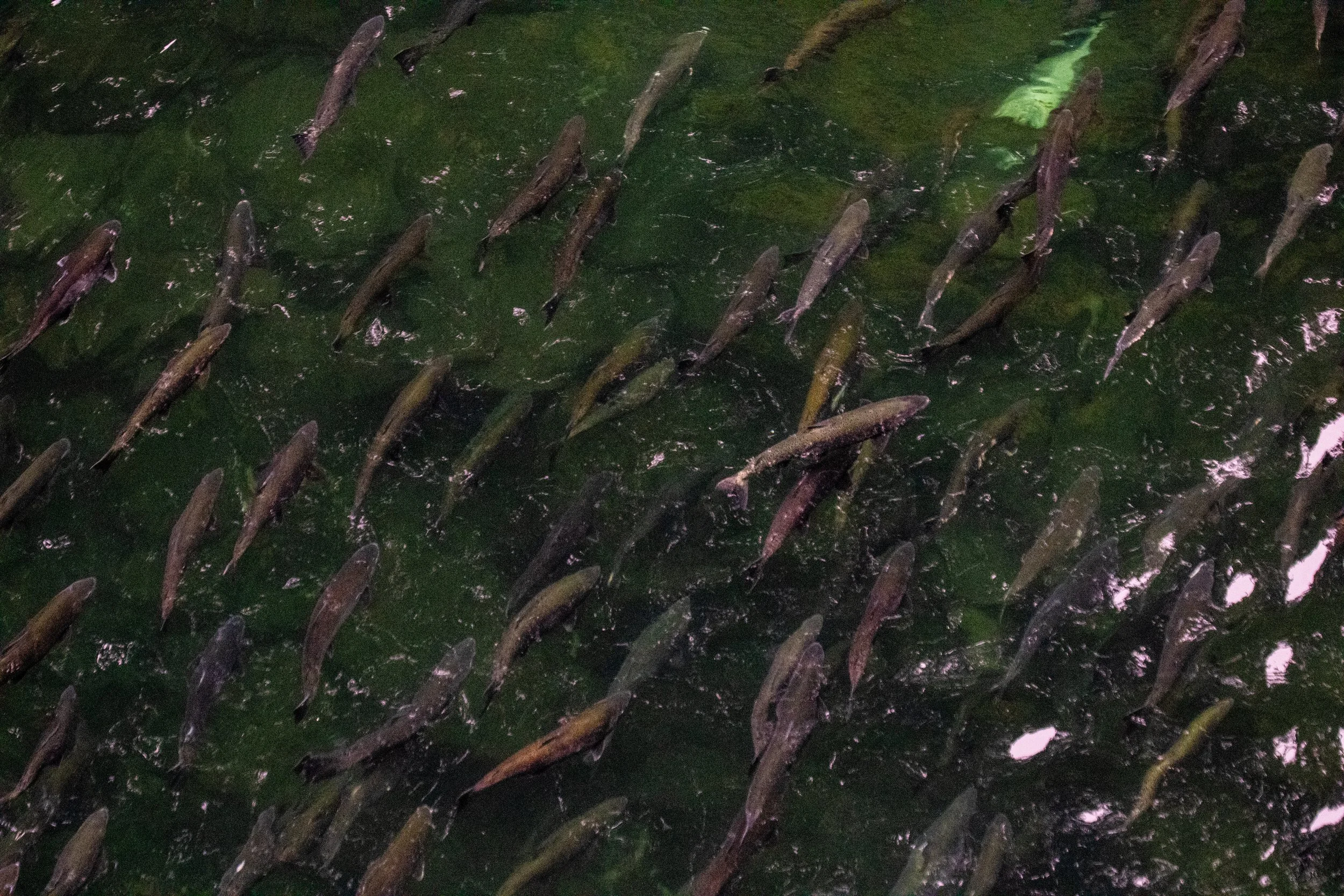
Chinook Salmon in a pool. Photo by Kendra Nelson
Historically, the Columbia and Snake River basins produced some of the most important Chinook stocks supporting the SRKWs. Before extensive dam construction and habitat degradation, the Columbia River Basin supported an estimated 1–3 million adult spring/summer Chinook annually, with the Snake River basin alone contributing well over one million fish in some years.
Today, many Snake River spring/summer Chinook populations are listed as Endangered or Threatened under the Endangered Species Act. In recent years, total adult returns have frequently numbered only in the tens of thousands basin-wide, and natural-origin returns in some populations have dropped into the low thousands, or even hundreds, in poor years.
What We Are Urging the Council To Do
We are urging the Council to adopt a Fish and Wildlife Program that:
Maintains and expands effective spill measures through August 31 and adaptively during climate stress events.
Advances a credible, regionally coordinated pathway toward Lower Snake River dam breaching, including evaluation of replacement energy portfolios, grid reliability strategies, irrigation transitions, and community investments.
Invests in tributary, floodplain, and estuary restoration, which improve juvenile growth, survival, temperature moderation, and food-web productivity.
Requires transparent performance metrics and accountability to ensure Bonneville Power Administration mitigation spending demonstrably benefits fish and wildlife.
Federal courts have repeatedly held that hydropower operations must avoid jeopardizing ESA-listed species and rely on the best available science. The Council’s Program update must align with those rulings.
How to Submit a Public Comment:
Submit a public comment on the Northwest Power and Conservation Council’s website:
https://projects.nwcouncil.org/program/comment_form
Deadline: January 19, 2026 at 11:59 p.m. PST.
Tips for Submitting a Public Comment:
Avoid pre-written scripts and copy-and-paste templates. New practices make it so that pre-written templates only get counted once. Meaning if multiple people submit the same comment, letter, or email, it will only be recorded once. Make it personal and unique to make sure it is counted.
Cite resources and relevant data that support your comment. Scientific publications referenced in public comments MUST be addressed by policymakers and make for a strong public comment.
Be respectful and polite in your comments, emails, or phone calls.
Get personal, share your experiences, and explain why you care. Personal messages carry more sentiment and weight, which are more meaningful and can have a bigger impact on policymakers. To make this easy, we have included some suggested peer-reviewed and open-access scientific papers below.
Suggested talking points:
Peer-reviewed research and federal recovery planning identify reduced food availability, particularly for Chinook salmon, as a major limiting factor for Southern Resident killer whale survival and recovery.
Snake River spring Chinook are among the most energy-rich prey available to Southern Resident killer whales, meaning declines in these stocks directly affect the whales’ ability to survive and reproduce.
Because Southern Resident killer whales cannot recover without abundant, predictable Chinook salmon, decisions about dam operations and long-term river management directly shape the future of both salmon and orca recovery.
Before extensive dam construction, the Columbia and Snake River basins produced millions of spring and summer Chinook annually; today, many Snake River populations remain Threatened or Endangered, and far below historic levels.
Scientific data show that Snake River salmon returning through multiple dams have consistently lower survival rates than many less-dammed or undammed populations, indicating ongoing structural challenges within the hydropower system.
Decades of research demonstrate that increased spill over dams improves juvenile salmon survival, making spill one of the most immediate and scientifically supported tools to increase returns.
Independent scientific review has concluded that achieving long-term recovery for Snake River salmon will likely require major system changes, and that breaching the four Lower Snake River dams provides the greatest biological benefit among structural alternatives.
Restoring a free-flowing Lower Snake River would reconnect cold-water spawning habitat, reduce reservoir warming, and improve migration conditions at a time when climate change is increasing stress on salmon.
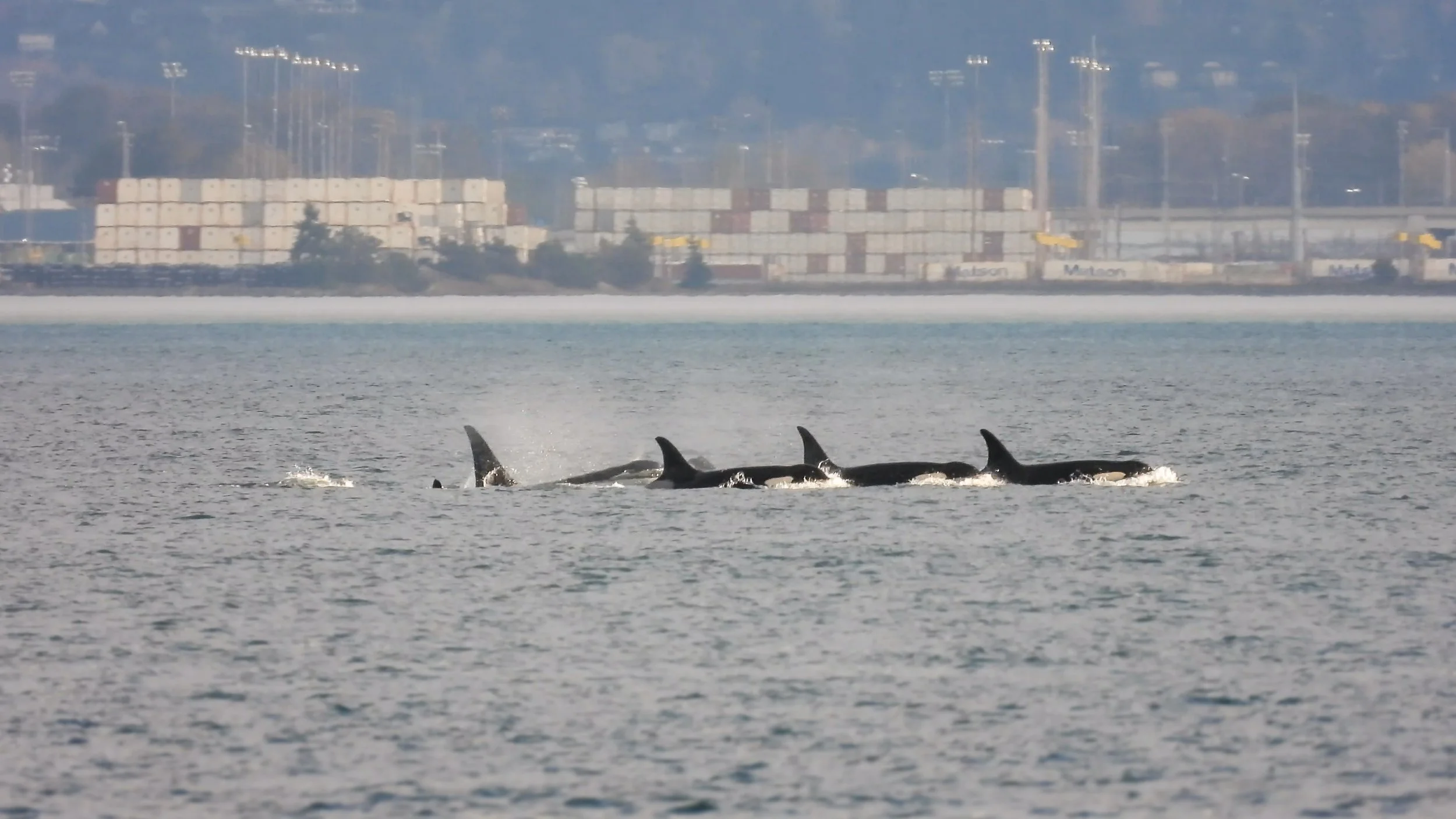
J14s & other members of J Pod. Photo by Tamara Kelley
Scientific Resources:
1. Recovery Plan for Southern Resident Killer Whales (Orcinus orca)
National Marine Fisheries Service (2008).
Key Point: Identifies reduced Chinook salmon abundance as the primary limiting factor to Southern Resident killer whale survival and recovery under the Endangered Species Act.
https://www.fisheries.noaa.gov/resource/document/recovery-plan-southern-resident-killer-whales
2. Columbia River Basin Historical Chinook Abundance Estimates
Northwest Power and Conservation Council (2014).
Key Point: Documents that prior to extensive hydropower development, Columbia and Snake River spring/summer Chinook returns were estimated in the millions annually, underscoring the magnitude of current declines.
https://www.nwcouncil.org/sites/default/files/2014-12_1.pdf
3. Comparative Survival Study (CSS) Annual Report
Fish Passage Center (2023).
Comparative Survival Study.
Key Point: Shows that Snake River spring/summer Chinook and steelhead consistently exhibit lower smolt-to-adult return rates (SARs) than many undammed or less-dammed populations, with many stocks remaining below recovery benchmarks.
https://www.nwcouncil.org/media/filer_public/58/82/588263f5-6f53-4b2a-9a8e-3693b0c18399/ISAB_2025-3_ReviewOfDraftCSS2025AnnualRpt_22Oct.pdf
4. Columbia River System Operations Environmental Impact Statement
National Marine Fisheries Service (2020).
U.S. Department of Commerce.
Key Point: Concludes that spill over mainstem dams improves juvenile salmon survival by reducing turbine passage, injury, and delayed mortality.
https://www.nwd.usace.army.mil/crso/
5. The Cold-Water Climate Shield: Delineating Refugia for Preserving Salmonid Fishes Through the 21st Century
Isaak, D.J., Young, M.K., Nagel, D.E., et al. (2015).
Global Change Biology, 21(7), 2540–2553.
Key Point: Identifies high-elevation headwater habitats as critical thermal refugia for salmon under projected climate warming, emphasizing the importance of reconnecting cold-water spawning areas.
https://onlinelibrary.wiley.com/doi/full/10.1111/gcb.12879
6. Lower Snake River Juvenile Salmon Migration Feasibility Report
U.S. Army Corps of Engineers (2002).
Lower Snake River Feasibility Study.
Key Point: Evaluates structural alternatives including dam breaching and identifies significant biological improvements in juvenile migration conditions under breaching scenarios.
https://www.nww.usace.army.mil/portals/28/docs/environmental/drew/social.pdf
Donate