ACTION ALERT: Oppose Proposed Industrial Rezoning Near Critical Marine Habitat
CANADA: Submit a comment for the April 16, 2026, public hearing to protect Cable Bay and Dodd Narrows, habitat used by the critically endangered Southern Resident killer whales.
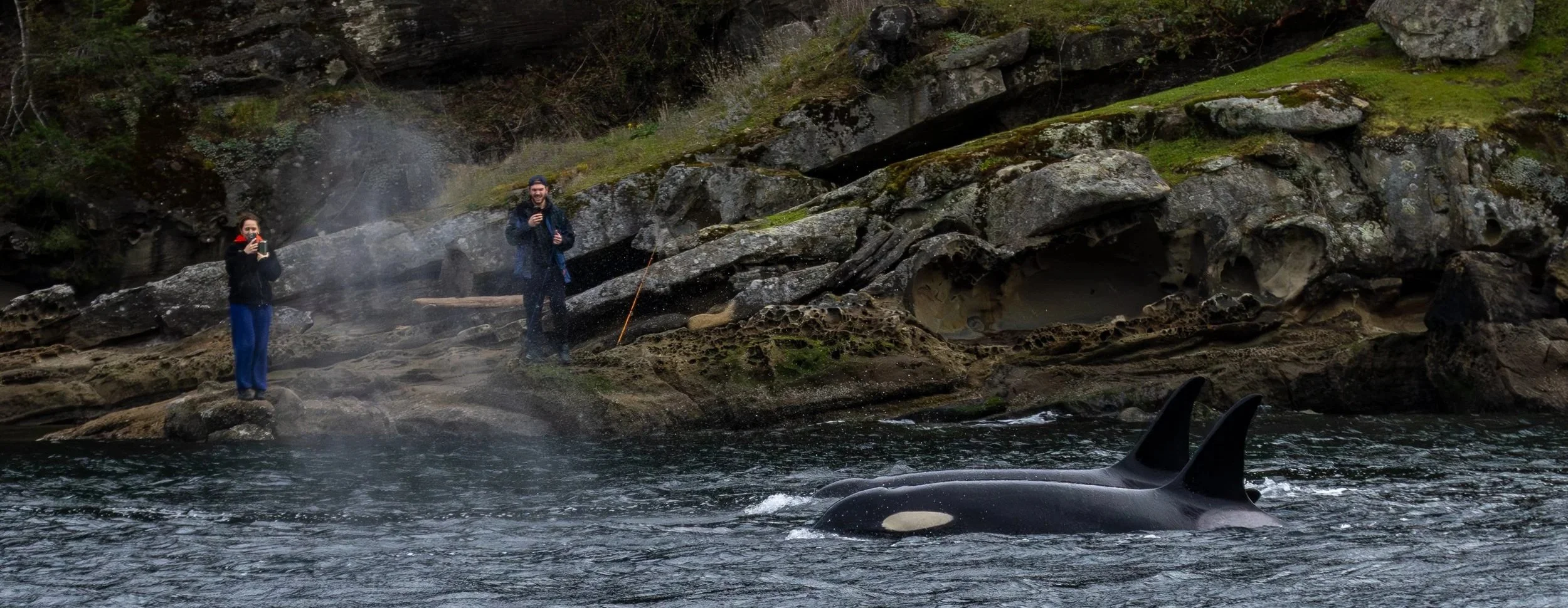
J37 & other members of J Pod passing shore-based whale watchers in Dodd Narrows, taken by Kendra Nelson
What’s Happening and Why it Matters:
On April 16, 2026, the City of Nanaimo is holding a public hearing to consider a proposed zoning amendment (Bylaw No. 4500.249) that would rezone public coastal lands near Cable Bay and Dodd Narrows and open them up for industrial use. If approved, this change would allow future industrial development in a sensitive habitat that supports many species, including the critically endangered Southern Resident killer whales, which use this habitat.
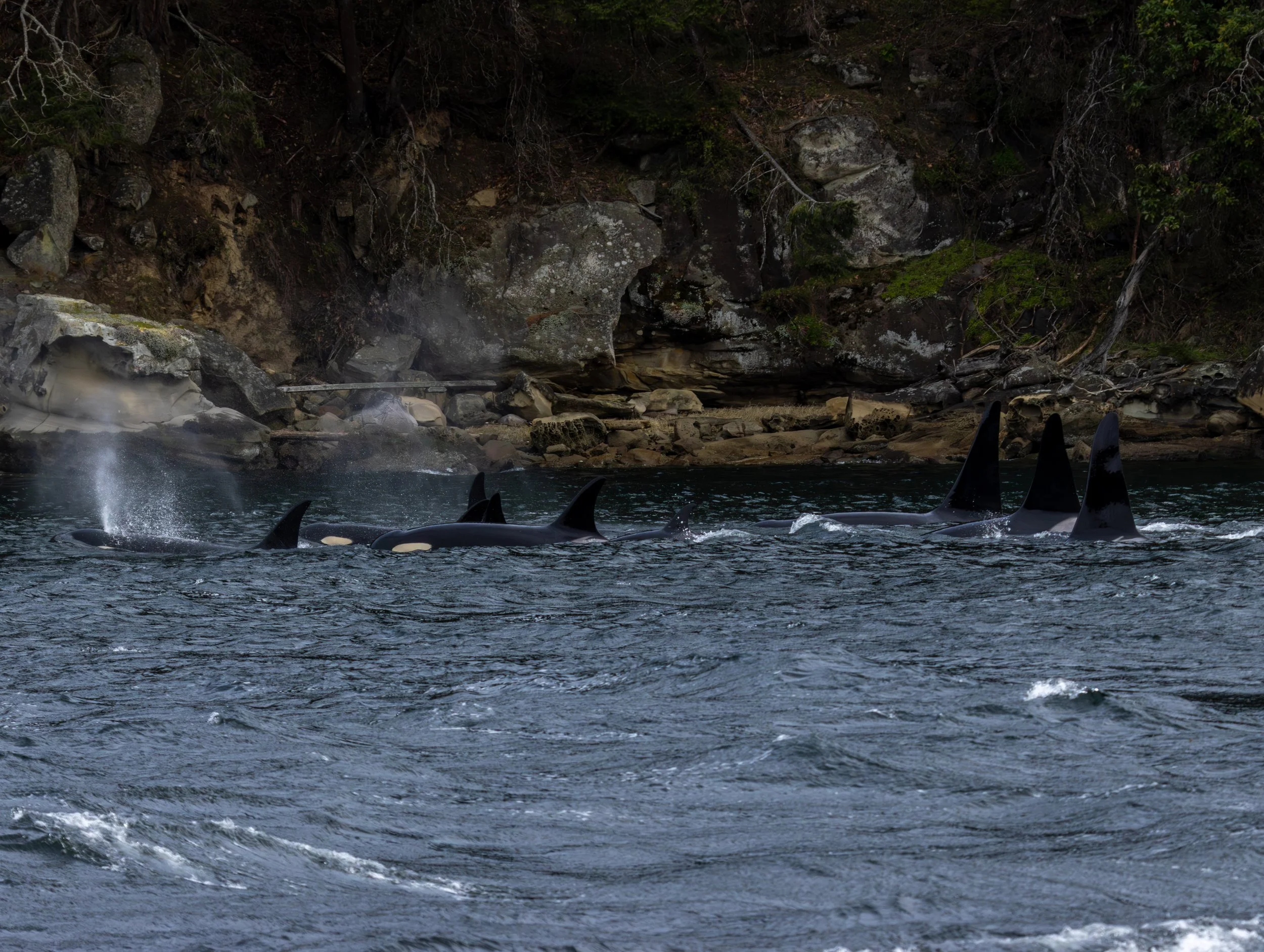
J Pod in Dodd Narrows. Photo by Kendra Nelson
Dodd Narrows: a remarkably rich coastal ecosystem
Just south of the Nanaimo River estuary, the narrow passage of Dodd Narrows cuts between Vancouver Island and Mudge Island, a place where fast-moving tides churn nutrients to the surface and sustain a remarkably rich coastal ecosystem. Here, life collects in layers: anemones and sea stars cling to rocks in the intertidal, salmon navigate the channel, sea lions push through the rushing tide, and broad-leaved stonecrop nestle in the cracks on the rocky shoreline beneath your feet. If you’re lucky, you may get to see a pod of orcas passing through.
Reaching the narrows on foot means winding along the Cable Bay Trail, a forested corridor that is as alive as the waters waiting at the end of your hike. Douglas fir, cedar, and arbutus trees tower above the trail. There are still Garry oak ecosystems here — one of British Columbia’s most biodiverse ecosystems, but one that is under extensive threat in the province. These ecosystems were once common in their range, now it is estimated that less than 5% of Garry Oak ecosystems remain in near-natural condition.
Once you reach Joan Point Park, at the end of Cable Bay Trail, Dodd Narrows awaits. This is one of the most incredible places to view orcas from shore. Just last week, Orca Conservancy’s Board Director Kendra Nelson sat on shore watching as J Pod surged through the current and waves, breaching, spyhopping, and tail slapping along the way. All 27 whales moved together, onlookers marveling at the story unfolding in this beautiful pocket of nature.
While Dodd Narrows and the surrounding habitat are a haven for wildlife and locals, the area is under threat from development. The lands to the west side of the trail are owned by Nanaimo Forest Products Limited (NPFL), which has proposed industrial lots as close as 50 meters from the trail. Residential lots have also been proposed on the East side of the trail.
Proposals would mean that over 200 acres of forest in the area would be cut down, and the Garry oak meadow, one of the most endangered ecosystems in Canada, would be lost. Over 7,000 trees will be cut down. Deforestation increases the risk of sediment runoff, pollution, and floods in the area. Erosion of pollutants and sediment into Stuart Channel, Dodd Narrows, and Northumberland Channel reduces the quality of habitat for marine species.
Just in January 2026, there was a diesel spill near Dodd Narrows, with a Transport Canada flight estimating that between 350 and 1,600 liters of oil sheen was on the water between Duke Point and Mudge Island. It is estimated that 1,800 liters of oil spilled into the waterway from an industrial site. The spill was first flagged by community members who noticed the strong smell of diesel and iridescent sheen on the water and rocks. The source of the spill was traced back to a private commercial environmental waste operation. The facility, which handles used oil and battery recycling, allowed petroleum-based material to enter a municipal storm drainage culvert. This culvert acted as a direct conduit, carrying the contaminants from the industrial site and discharging them into the marine environment at Cable Bay.
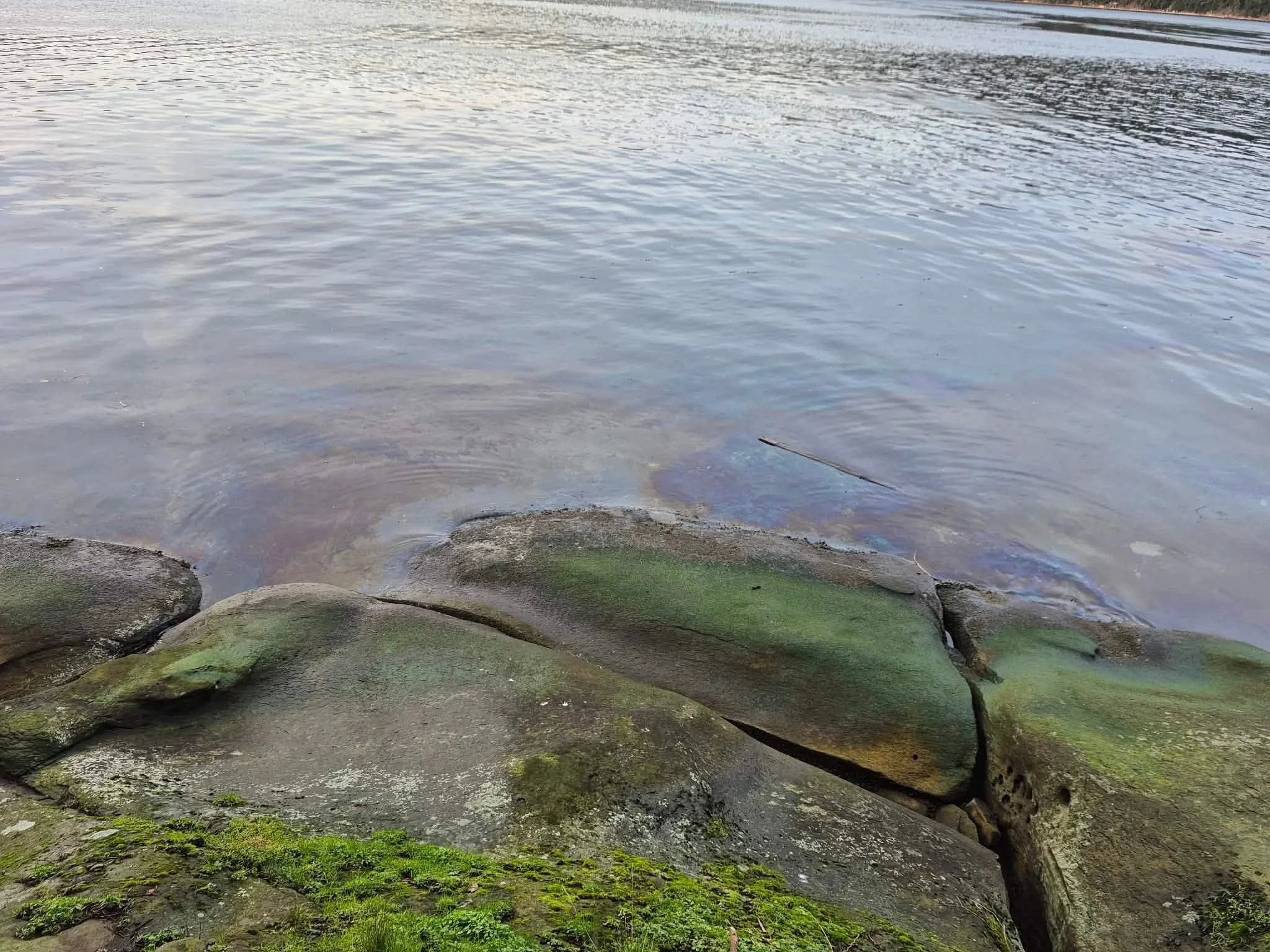
Oil sheen in Dodd Narrows from spill in January 2026. Photo by: Jackie Wasyluk/ Save Cable Bay
In response to the spill, Fisheries and Oceans Canada (DFO) has implemented an emergency chemical contamination closure for bivalve shellfish in the affected areas. A 300-metre boom was successfully deployed to stem the outflow from the contaminated culvert, while shoreline and underwater cleanup efforts were performed to remove oily residue from the water and the foreshore, though these actions were done days after the initial incident occurred. The Snuneymuxw First Nation has called for a temporary closure and environmental investigation into the incident and other polluting activities in the area.
Healthy waterways are important for the shellfish, algae, salmon, seals, and orcas.
Check out this video by Sarah Callies, actress from The Walking Dead, sharing more about this important area and the need for protection. https://www.facebook.com/share/v/1Cpg1cxn4R/
How can you help and take action?
In March 2026, an application to rezone nearly 75 hectares (182 acres) next to Cable Bay Trail into industrial I4 (heavy industrial) zoning land will move ahead for public consultation. If you live on Vancouver Island or Vancouver and want to speak up to protect this area, attend the public hearing on April 16 at 7:00 p.m. in the Shaw Auditorium (80 Commercial St, Nanaimo, BC). You can also submit comments online or call-in during the hearing to comment. Instructions on how to watch the Public Hearing online is here: https://www.nanaimo.ca/your-government/city-council/council-meetings/public-hearings
How to submit a public comment:
Submit a comment online, or by email to public.hearing@nanaimo.ca, referencing bylaw number RA000503 in your submission.
Tips for public comment:
Be respectful and polite in your comments, emails, or phone calls.
Cite resources and relevant data that support your comment.
Get personal, share your experiences, and explain why you care. Personal messages carry more sentiment and weight, which are more meaningful and can have a bigger impact on policymakers. Share your experience hiking the trail, what wildlife you saw, or a time you saw orcas pass through Dodd.
Encourage any zoning of the area to prioritize giving as much buffer room to Cable Bay Trail and Joan Point Park and preserver important ecological areas in the forest. Increased development will lead to increased pollution and impacts to ecosystems, it is important that the ecosystems are thought of in this process, and that local residents concerns are heard.
Not able to attend or need other ways to help?
Learn more about the threats to Cable Bay and Dodd Narrows from the“Save Cable Bay” movement and Facebook group.
Sign the petition to preserve and expand the Cable Bay Trail. Over 23,000 people have already signed the petition to preserve and expand Cable Bay Trail, advocating for this area to be protected as a park. Cable Bay is not the space for more industrial development. It is an important, biodiverse ecosystem and beloved natural space for local communities.
Don’t live in British Columbia? While you may not be able to do more for Cable Bay and Dodd Narrows, let this be a message to look around you and what ecosystems you can protect in your own communities. From coastal cities to neighborhoods in the desert, urban areas are full of important natural spaces that need protection and advocates. These places are not just scenic getaways but vital ecosystems where wildlife continue to thrive, reminding us of the interconnectedness between land, water, and life. Because all of these ecosystems are interconnected. Protecting and conserving terrestrial habitats does help aquatic habitats.
Advocate for sustainable development policies and be involved in local community conservation. Community engagement is essential — residents and visitors must play a role in preserving ecosystems. You can also help us in our efforts by supporting our work and making a donation today.