ACTION ALERT: Protect Green-Duwamish Watershed from Aggregate Mining
Submit a public comment urging King County to fully evaluate and avoid harmful environmental impacts from the proposed Cumberland Aggregate Mine and Asphalt Plant in the Green-Duwamish watershed.
Comments due August 7, 2026
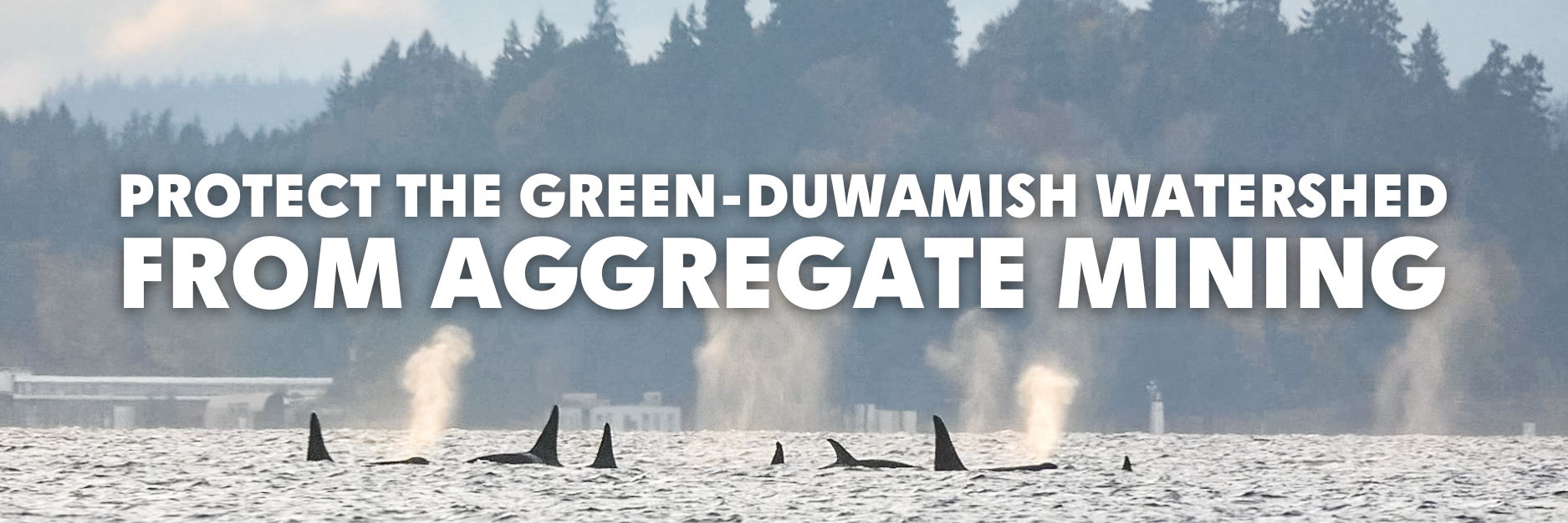
L Pod outside Elliot Bay, Seattle, near the Green-Duwamish Estuary. Taken by Tamara Kelley
What’s Happening & Why It Matters:
King County’s Department of Local Services Permitting Division has determined that the proposed Cumberland Aggregate Mine and Asphalt Plant is likely to have significant adverse impacts on the environment and has issued a Determination of Significance under Washington’s State Environmental Policy Act (SEPA). As a result, King County will prepare a full Environmental Impact Statement (EIS) for this project in compliance with RCW 43.21C.030(2)(c).
The proposal would develop large-scale aggregate mining and an asphalt plant, including drainage and water-quality facilities, access roads, and other infrastructure across roughly 990 acres of forest-zoned land in the Green River watershed.
King County has initiated a formal EIS scoping process, inviting agencies, Tribal Nations, affected communities, and members of the public to comment on the scope of the EIS.
How This Affects Orca Recovery
The Green-Duwamish watershed supports Chinook salmon, steelhead, coho, and other native fish species that are critical to the ecological health of Puget Sound. Chinook salmon are especially important as they make up 70-90% of the diet of the Southern Resident killer whales (SRKWs), which are critically endangered and protected under the Federal and State Endangered Species Act. Prey limitation has been identified by NOAA as one of the primary threats to their recovery.
Aggregate mining, asphalt production, and the associated construction can degrade water quality, shrink and degrade salmon habitat, and reduce the resilience of already climate-stressed watersheds. These impacts undermine decades of public and private investment in salmon restoration, jeopardizing efforts to recover SRKW and salmon.
The Washington Supreme Court has consistently recognized that SEPA is an environmental "full disclosure" statute designed to ensure that governmental agencies make informed decisions only after carefully considering the probable environmental consequences of a proposal. As such, the EIS for the Cumberland Aggregate Mine and Asphalt Plant should provide a thorough, science-based evaluation of all probable direct, indirect, and cumulative environmental impacts before any permitting decisions are made.
How to Submit a Public Comment
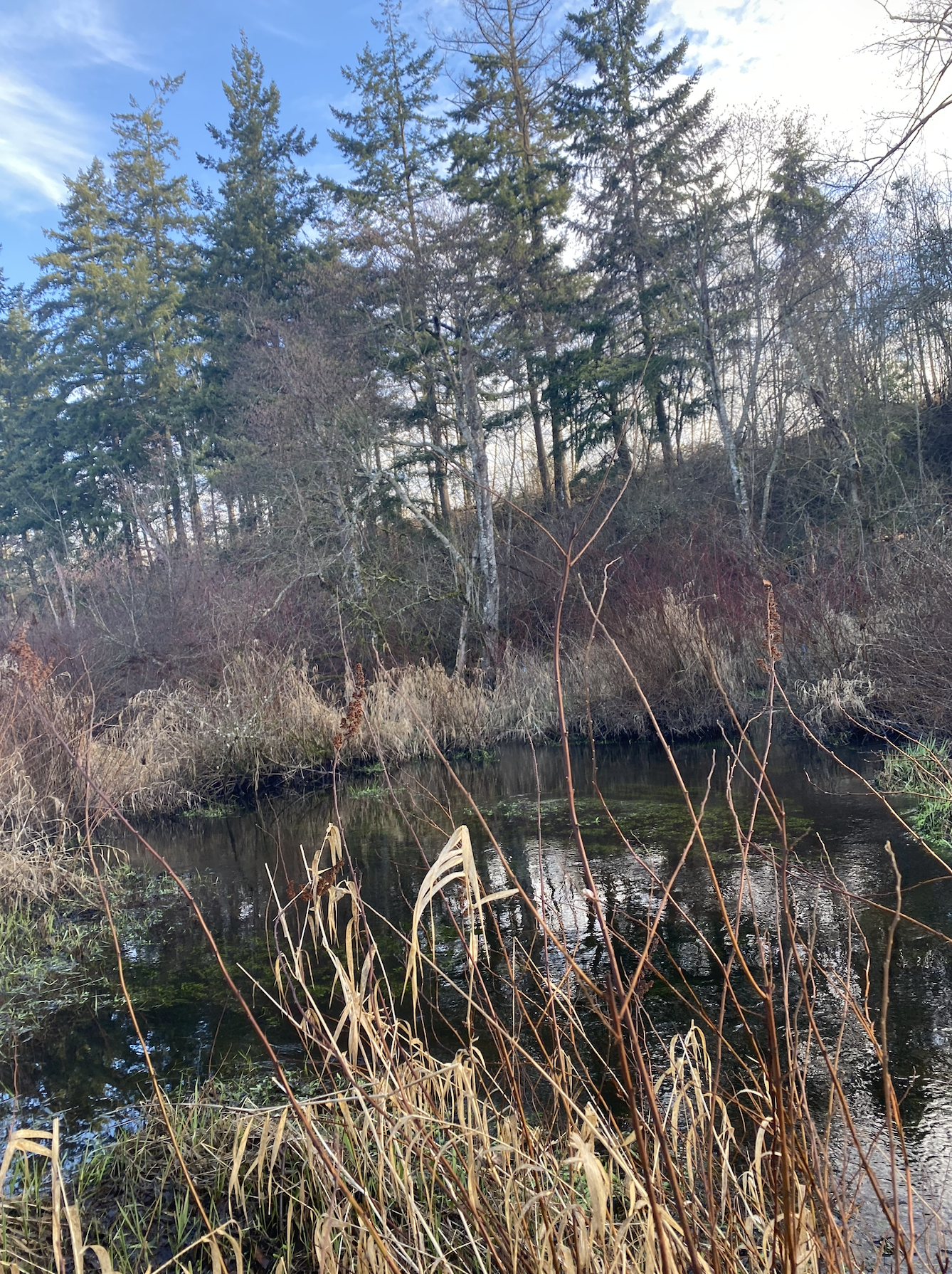
Soos Creek on our CWA Restoration site, part of the Green-Duwamish Watershed
Submit written comments to King County’s SEPA Official, Ty Peterson by email or mail at the addresses below:
Email: ty.peterson@kingcounty.gov
Mail: SEPA Official, 919 SW Grady Way, Suite 300, Renton, WA 98057
Comments Due: August 7, 2026
When you submit your comment:
Reference File No. GRDE23-0083 (Cumberland Aggregate Mine and Asphalt Plant)
Note that you are commenting on EIS scoping for the project
Tips for Submitting a Public Comment:
Avoid pre-written scripts and copy-and-paste templates. New practices make it so that pre-written templates only get counted once. Meaning if multiple people submit the same comment, letter, or email, it will only be recorded once. Make it personal and unique to make sure it is counted.
Get personal, share your experiences, and explain why you care. Personal messages carry more sentiment and weight, which are more meaningful and can have a bigger impact on policymakers. To make this easy, we have included some suggested taking points, as well as peer-reviewed and open-access scientific papers and other resources below.
Suggested Talking Points:
This comment is asking for input on the scope of the Environmental Impact Statement. You may comment on alternatives, mitigation measures, probable significant adverse impacts, factors of the environment that should be studied, and licenses or other approvals that may be required.
Southern Resident killer whales depend on Chinook salmon for the majority of their diet and require a large, consistent prey base to support survival and population growth.
King County should evaluate how any reduction in Chinook productivity from this project could further limit prey availability for SRKW.
The EIS needs to recognize that impacts to Chinook-producing watersheds extend beyond local fisheries to impact the recovery of a federally endangered marine mammal.
SRKWs are protected under both the Federal and Washington State Endangered Species Act, and as such King County has a duty to consider any impact this project may create for a protected species.
Chinook populations throughout Puget Sound are below historical abundance, and incremental habitat loss/degradation can contribute to long-term declines.
Maintaining adequate stream flow is essential to prevent lethal water temperatures, habitat loss, and migration barriers for spawning salmon. Scientific evidence shows that low flow and warm water conditions significantly reduce salmon survival at multiple life stages. Changes in the watershed during low-flow periods can directly affect salmon spawning, incubation, and juvenile rearing habitat. The EIS should conduct an analysis of:
Chinook and other salmonids' life cycle in the watershed, including spawning, incubation, juvenile rearing, migration corridors, and overall habitat interconnectivity.
Thermal impacts to streams and tributaries, recognizing that increased water temperatures reduce salmon survival.
How the Cumberland Aggregate Mine and Asphalt Plant operations could alter groundwater recharge, aquifer function, stream baseflows, wetlands, and ground-water surface water interactions in the watershed, and assess how these changes would impact in combination with existing water-quality stressors and the Green-Duwamish watershed.
How the project may interact with existing/increasing climate-driven changes, such as warmer stream temperatures, altered precipitation patterns, reduced snowpack, intense flooding, and severe summer low flows.
Healthy, resilient watersheds are vital for thriving salmonid populations, as well as other native freshwater species and riparian vegetation. Runoff of sediment, pollution, and other contaminants can be fatal.
King County should evaluate both short-term construction impacts and long-term operational impacts in the watershed, including conditions following site reclamation.
The EIS should examine impacts from sedimentation, turbidity, erosion, stormwater runoff, spills, asphalt production, airborne particle deposition, and contaminant transport.
The EIS should look at effects on riparian vegetation, floodplain function, large woody debris recruitment, channel stability, and floodplain connectivity to support salmon production.
Projects increasing watershed stress now may significantly reduce long-term resilience for salmon and SRKW prey.
Cumulative impacts should be evaluated in combination with historic habitat loss, transportation infrastructure, ongoing urbanization, and climate change.
Tribal Nations, agencies, nonprofits, volunteers, and landowners have invested millions of dollars and countless hours restoring habitat in the Green-Duwamish watershed
The EIS should identify if/how the Cumberland project could diminish, offset, or compromise the ecological benefits of these restoration investments.
A large, multi-decade mining and asphalt operation may introduce substantial noise, dust, traffic, and light pollution, impacting wildlife and nearby communities.
The EIS should also evaluate public services and fire safety, including availability of water for firefighting and risks posed by industrial operation in a forested landscape.
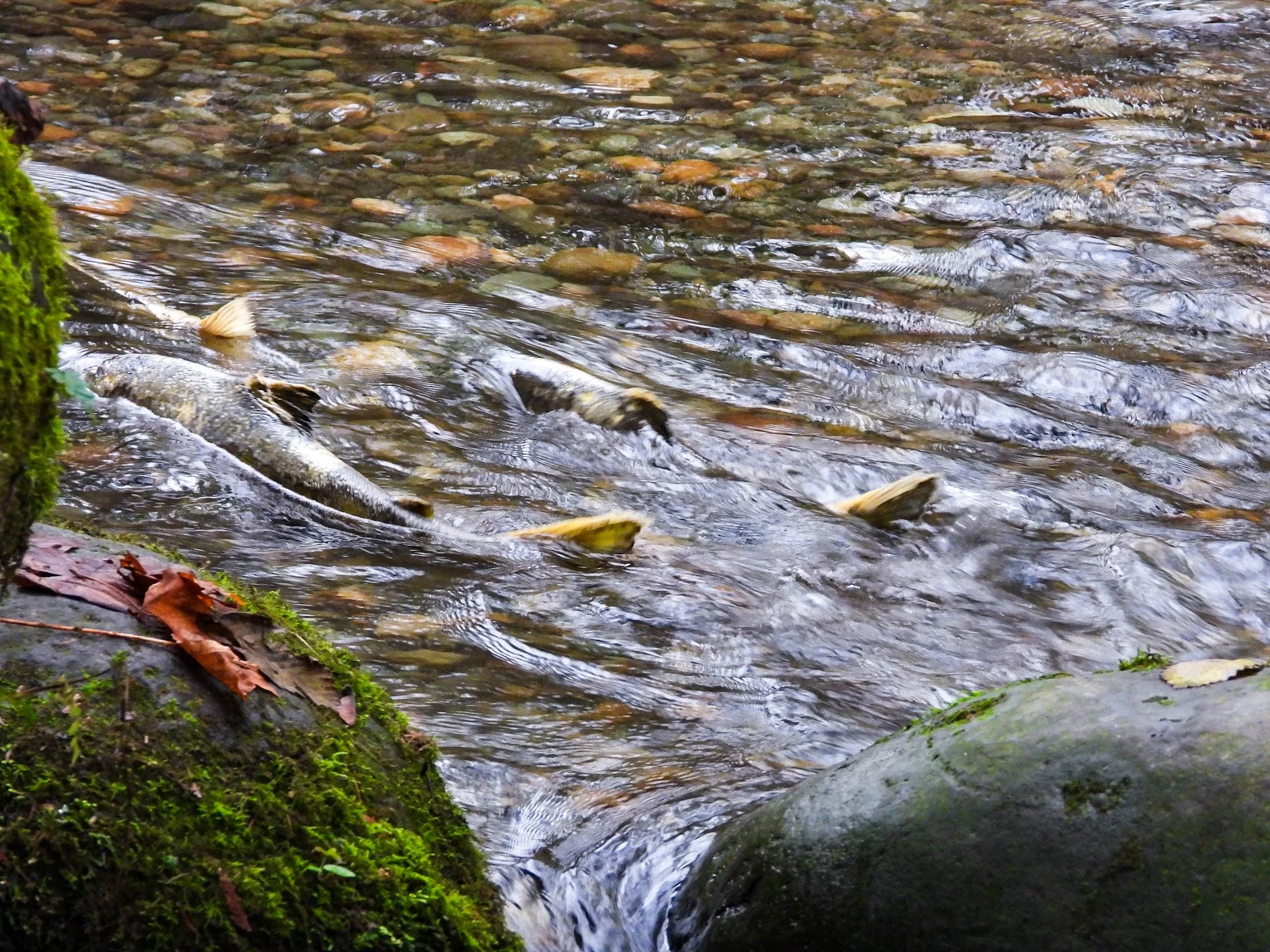
Chum Salmon in Piper’s Creek. Taken by Tamara Kelley
Read Orca Conservancy’s comment letter
Scientific Resources:
Endangered Predators and Endangered Prey: Seasonal Diet of Southern Resident Killer Whales
Hanson, M.B., et al.
Key takeaways: Confirms Chinook salmon dominate SRKW diet across seasons
https://journals.plos.org/plosone/article?id=10.1371/journal.pone.0247031Species and stock identification of prey consumed by endangered southern resident killer whales in their summer range
NOAA Fisheries
Key takeaways: SRKW recovery is strongly limited by prey availability; increasing Chinook abundance is a primary recovery objective
https://www.researchgate.net/publication/238733682_Species_and_stock_identification_of_prey_consumed_by_endangered_southern_resident_killer_whales_in_their_summer_rangeImpacts of Climate Change on Key Aspects of Freshwater Salmon Habitat in Washington State
Nathan Mantua, Ingrid Tohver, Alan Hamlet
Key takeaways: Chinook, coho, and steelhead are predicted to experience large increases in hydrologic and thermal stress in summer due to diminishing streamflows and increasingly unfavorable stream temperatures.
https://cig.uw.edu/wp-content/uploads/sites/2/2020/12/wacciach6salmon649.pdfSpatially variable effects of streamflow on water temperature and thermal sensitivity within a salmon-bearing watershed in interior British Columbia, Canada
Ulaski, M. E., Warkentin, L., Naman, S. M., & Moore, J. W.
Key takeaways: Low-flow and high temperatures can negatively impact salmonid rearing in streams.
National Marine Fisheries Service National Gravel Extraction Guidance. U.S. Dep. Commerce, NOAA
Packer, D. B., K. Griffin, and K. E. McGlynnKey takeaways: Details how instream gravel extraction can cause direct harm to salmonids, loss or degradation of spawning/rearing/staging habitat, and migration delays, with management recommendations for minimizing impacts.
https://spo.nmfs.noaa.gov/sites/default/files/tm70.pdfMigration in drought: Receding streams contract the seaward migration window of endangered salmon
Kastl et al
Key takeaways: Low-flow streams during droughts shorten the migration window for juvenile salmonids which increases stress, predation, and survival.
https://esajournals.onlinelibrary.wiley.com/doi/full/10.1002/ecs2.4295Risks of mining to salmonid-bearing watersheds
Christopher J. Sergeant et al
Key takeaways: Salmon utilize entire watersheds cross multiple lifestages, so mining anywhere in a watershed can reduce reproduction, rearing success, and population resilience.
https://www.science.org/doi/10.1126/sciadv.abn0929