A Milestone for Southern Residents: California Advances Protections for an Iconic Population
June 17th, 2026, marks an important step forward in the fight to recover the Southern Resident killer whales (SRKW).
The California Fish and Game Commission has voted to grant candidacy status to the Southern Resident killer whale population under the California Endangered Species Act (CESA), formally recognizing that these whales may warrant protection as a state-listed endangered species.
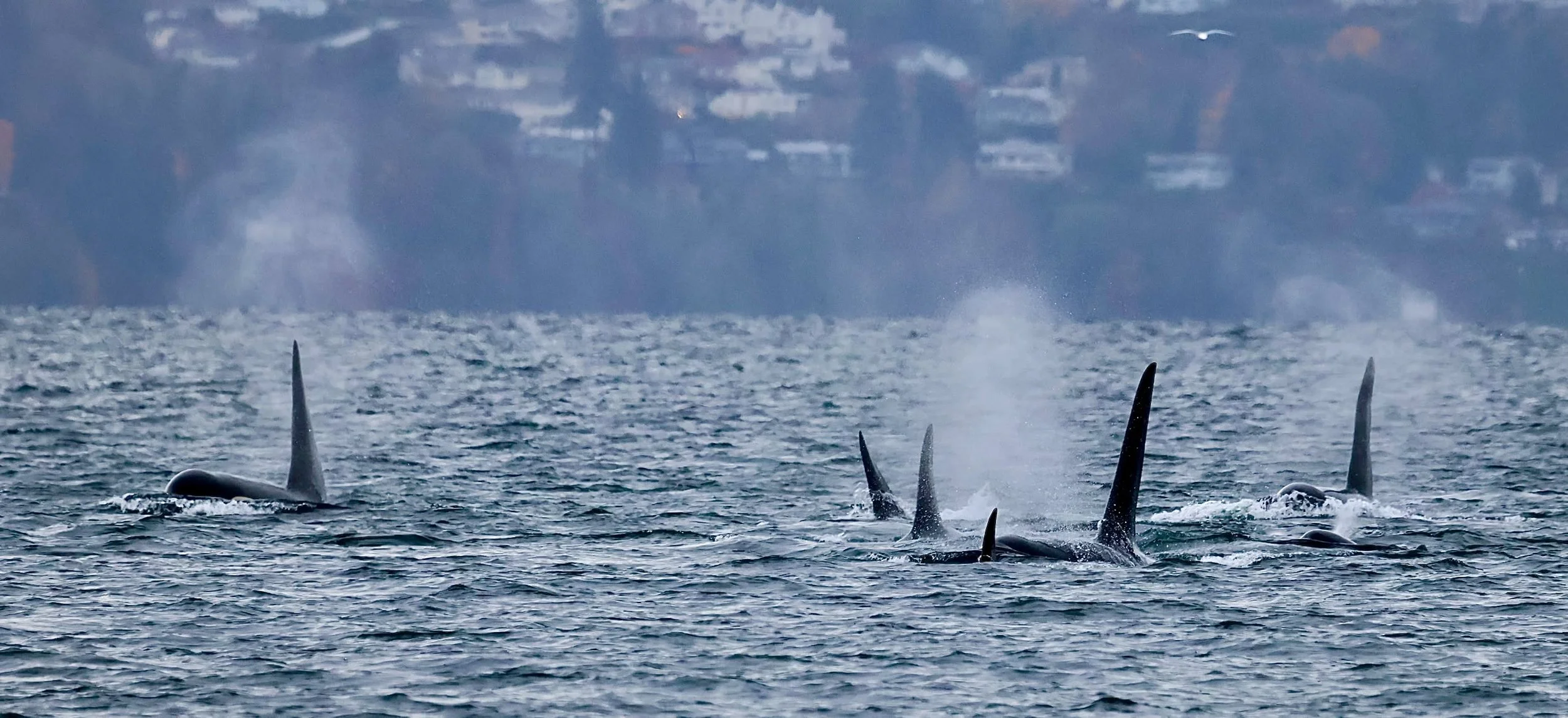
Image: Members of J- and K-Pod | Shari Tarantino | Orca Conservancy | 2024
While this is not yet a final listing decision, it is a significant milestone. The candidacy determination acknowledges what scientists, advocates, Tribal Nations, and communities throughout the Pacific Northwest have known for decades: Southern Residents face an ongoing risk of extinction and require stronger protections to survive and recover.
For Orca Conservancy, this moment represents both a reason to celebrate and a reminder that much work remains ahead.
Why This Matters
Southern Resident killer whales are among the most endangered marine mammal populations in North America.
Today, only 75 individuals remain. The population has declined dramatically from historic levels, and recovery efforts have been challenged by three primary threats:
Lack of sufficient Chinook salmon prey
Toxicants contamination that accumulates in their bodies
Vessel disturbance and underwater noise that interfere with feeding and communication
Although Southern Residents have been federally listed as endangered under the U.S. Endangered Species Act since 2005, California currently lacks state-level protections specifically recognizing the population's endangered status.
California plays an important role in the lives of Southern Residents. While they are most commonly associated with Washington State and British Columbia, Southern Residents regularly travel along the California coast, particularly during winter months, following Chinook salmon runs.
State recognition would strengthen California's ability to consider Southern Resident recovery in management decisions affecting habitat, prey availability, pollution, and other activities occurring within state jurisdiction.
What Does "Candidate" Status Mean?
Under CESA, candidacy status is not merely symbolic.
Once a species is accepted as a candidate for listing, it receives many of the same legal protections afforded to species already listed as threatened or endangered while the scientific review process moves forward.
This means state agencies must consider potential impacts to Southern Residents during the candidacy period and evaluate whether activities could harm the population or hinder its recovery.
The candidacy process also triggers a comprehensive scientific review to determine whether the population meets California's criteria for endangered status.
Why State Protections Matter
Some may ask: if Southern Residents are already federally endangered, why pursue state protections?
The answer is simple: every layer of protection matters.
Federal protections remain essential, but state laws can:
Provide additional regulatory tools.
Strengthen review of projects within California waters.
Increase attention to prey restoration efforts.
Improve coordination among agencies.
Elevate conservation priorities within state decision-making processes.
Recovery of Southern Residents will require action at every level of government. State protections create additional opportunities to address threats before they push the population closer to extinction.
What Happens Next?
The candidacy decision begins a formal review process that will likely take many months.
During this period:
1. Scientific Evaluation
The California Department of Fish and Wildlife will conduct a detailed status review examining:
Population trends
Threats to survival
Habitat needs
Existing protections
Recovery prospects
The review will assess whether Southern Residents meet the legal definition of an endangered species under California law.
2. Public Participation
Stakeholders, scientists, conservation organizations, Tribal Nations, agencies, and members of the public will have opportunities to submit information and participate in the process.
This phase is critical because it ensures the final decision is based on the best available science.
3. Final Commission Decision
After reviewing the scientific findings and public record, the California Fish and Game Commission will decide whether Southern Residents should be formally listed as endangered under CESA.
A final listing would establish permanent state-level protections for the population.
What Listing Alone Cannot Do
While candidacy and eventual listing are important, legal protections alone will not recover Southern Residents.
Recovery ultimately depends on addressing the underlying causes of decline:
Restoring Chinook salmon abundance throughout the West Coast.
Protecting and restoring freshwater and marine habitat.
Reducing toxic pollution entering the food web.
Limiting vessel disturbance and underwater noise.
Preventing catastrophic oil spills.
Ensuring climate resilience for salmon and marine ecosystems.
Listing can help drive these actions, but lasting recovery will require sustained commitment from governments, communities, businesses, and conservation organizations.
A Moment Worth Celebrating
The Southern Residents have endured decades of decline, yet they continue to inspire people across the Pacific Coast and around the world.
Today's candidacy decision reflects growing recognition that these whales deserve every reasonable chance to recover.
For Orca Conservancy, this milestone is both encouraging and motivating. We celebrate this progress, while remaining focused on the work ahead. The path to recovery is far from complete, but every meaningful step matters.
The Southern Residents cannot advocate for themselves.
We can.
And, California has taken an important step toward ensuring their future.
~"Future generations should inherit a world where Southern Resident killer whales still exist. Today, we have the opportunity -and the responsibility- to help ensure that future.” ~Shari Tarantino